February 22nd, 2026 at 8:18 am 
Lowrance Software Update
This Software Update is for the following models:
HDS® PRO, HDS® LIVE, HDS® Carbon, Elite™ FS, SonarHub™, S5100, S3100, S3100H, StructureScan®3D, ActiveTarget®, ActiveTarget®2, ActiveTarget®2 XL
This software update for Lowrance® fishfinder/chartplotters and sonar modules includes a suite of new features and functionality as well as various performance enhancements and bug fixes. The software is available for download at Lowrance.com/downloads or by over-the-air update when the display is connected to the internet.
The 26.1 update is available for all screen sizes of Lowrance displays including HDS PRO®, HDS LIVE®, Elite FS®, and HDS Carbon® and Sonar Modules including SonarHubTM, S5100, S3100, S3100H, StructureScan®3D, ActiveTarget® and ActiveTarget®2.
ActiveTarget® 2 XL Support
New with the 26.1 software update is support for the all-new ActiveTarget ® 2 XL System.
New with 26.1: update
ActiveTarget® Beam Indicator Icon accuracy improvements
• For optimal ActiveTarget Beam Indicator Icon accuracy, the MFD must be connected to a NMEA 2000® network that includes a Heading Sensor.
AIRMAR® CHIRP improvements
• Sensitivity and target return strength improvements when using AIRMAR® High-Wide and Medium CHIRP transducers.
Support for SideScan and DownScan Imaging™ when using StructureScan® 3D module
• The StructureScan® 3D sonar module must be updated to this new 26.1 software using one of the following devices: HDS® Gen3 and newer and Elite FS®
OTHER FIXES AND IMPROVEMENTS
Bug Fixes
• Fixed an issue where ActiveTarget could automatically change range while manual depth range was applied.
• Fixed bug asking to change the chart data selection every time after reboot when multiple C-MAP® charts were loaded on the same SD card.
For more detailed information please see the full release notes published on Lowrance.com.
Download the PDF for More Information

|
February 15th, 2026 at 6:25 pm
Bilge Pump Troubleshooting: Why Your Pump Isn’t Working & How to Fix It
The Most Common Reasons a Bilge Pump Won’t Turn On
1. Electrical Problems (Responsible for up to 80% of failures)
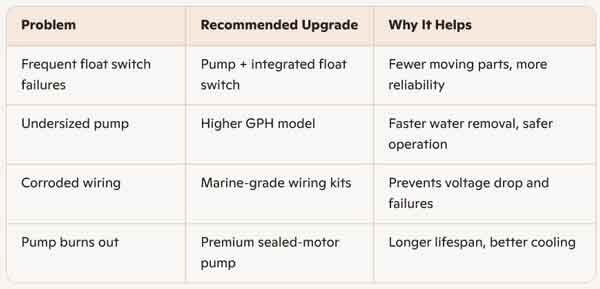
Marine technicians consistently report that most bilge pump failures stem from electrical issues—corroded wires, blown fuses, weak batteries, or bad connections.
What to check:
- Corroded or loose wiring
- Blown fuse or tripped breaker
- Low battery voltage
- Bad ground connection
Quick Fix:
Clean connections, replace the fuse, and test voltage at the pump.
2. Float Switch Failure (Most common cause of “pump won’t turn on”)
Float switches often get stuck due to debris, corrosion, or mechanical wear. Many sources note that up to 90% of “won’t turn on” issues trace back to a faulty float switch.
What to check:
- Debris under the float
- Sticking hinge
- Failed internal switch
Quick Fix:
Lift the float manually. If the pump activates, replace the switch.
3. Clogged Intake or Blocked Strainer
If the pump hums but doesn’t move water, the intake may be blocked by sludge, hair, or debris.
Quick Fix:
Clear the strainer and flush the bilge area.
4. Burnt‑Out Motor or Jammed Impeller
A pump that runs but won’t pump—or doesn’t run at all—may have a seized impeller or failed motor.
Quick Fix:
Inspect the impeller for debris. If the motor is burnt, replacement is the only solution.
5. Pump Runs Continuously (But Doesn’t Remove Water)
A continuously running pump signals a leak, float switch failure, or internal pump malfunction.
Quick Fix:
Check for leaks, test the float switch, and inspect the discharge hose for blockages.
Step‑by‑Step Bilge Pump Troubleshooting Checklist
1. Test the Manual Switch
If the pump runs manually but not automatically, the float switch is the culprit.
2. Check Voltage at the Pump
Use a multimeter to confirm power is reaching the unit.
3. Inspect the Fuse & Wiring
Replace corroded connectors and ensure marine‑grade wiring is used.
4. Clear the Intake & Strainer
Remove debris and ensure the pump is mounted correctly.
5. Test the Discharge Hose
Look for kinks, clogs, or backflow issues.
6. Evaluate Pump Age
If your pump is more than 3–5 years old, replacement may be more cost‑effective than repair.
When to Replace Your Bilge Pump Instead of Repairing It
Replace your pump if:
- The motor is burnt out
- The pump fails repeatedly after electrical fixes
- The float switch and wiring are new but the pump still won’t activate
- The pump is undersized for your vessel
Browse reliable replacements here: CLR Marine Bilge Pumps
Recommended Bilge Pump Upgrades (Based on Common Failure Points)
FAQs
Why does my bilge pump run but no water comes out?
Likely a clogged intake, blocked discharge hose, or jammed impeller.
Why won’t my bilge pump turn on at all?
Electrical issues or a failed float switch are the most common causes.
How often should I test my bilge pump?
Marine experts recommend testing before every outing and monthly during storage.
Final Call to Action
A failing bilge pump is more than an inconvenience—it’s a safety risk. Now that you understand the most common causes and fixes, you can confidently diagnose the issue and take action.
If your pump is beyond repair or you want a more reliable upgrade, explore CLR Marine’s curated selection:
|
February 8th, 2026 at 9:47 am
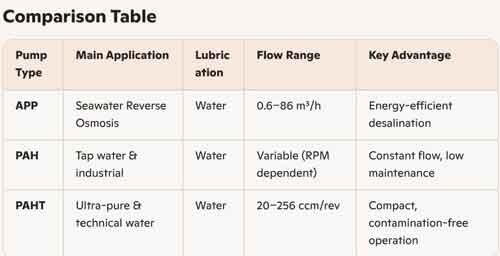
Differences Between Danfoss APP, PAH, and PAHT Pumps
Danfoss manufactures a wide range of high-pressure axial piston pumps tailored for different industries. While they share efficiency and reliability, each pump series—APP, PAH, and PAHT—is optimized for specific water types and applications. Understanding these differences helps engineers, operators, and buyers select the right pump for their system.
APP Pumps – Reverse Osmosis Specialists
APP pumps are compact, energy-efficient axial piston pumps designed for seawater reverse osmosis (SWRO). They are widely used in desalination plants, offshore platforms, and marine vessels.
Applications: Reverse osmosis for seawater and brackish water
Key Features:
- High efficiency with low energy consumption
- Simple construction with fewer parts for easy maintenance
- Flow range from 0.6 m³/h to 86 m³/h
- Suitable for land-based, marine, and offshore installations
PAH Pumps – Tap Water & Industrial Use
PAH pumps are positive displacement axial piston pumps designed for tap water and industrial high-pressure applications. Unlike centrifugal pumps, they deliver a constant flow regardless of discharge pressure.
Applications: Tap water pressurization, industrial cleaning, humidification, and cooling.
Key Features:
- Zero risk of lubricant contamination (water lubricated)
- Long service life with minimal maintenance
- High efficiency and low energy costs
- Flow proportional to RPM, ensuring predictable performance
PAHT Pumps – Ultra-Pure & Technical Water
PAHT pumps are engineered for ultra-pure and technical water applications, where contamination must be avoided. They are commonly used in electronics manufacturing, automotive parts cleaning, and adiabatic cooling systems.
Applications: Ultra-pure water, electronics, humidification, and cooling.
Key Features:
- Water-lubricated design, eliminating need for oil
- Compact and lightweight construction
- Very high mechanical efficiency wiith negligible pulsation
- Stainless steel AISI 316 design for hygiene and durability
FAQs
1: Which pump is best for seawater desalination?
The APP pump is specifically designed for seawater reverse osmosis, offering high efficiency and reliability.
2: Can PAH pumps be used for seawater?
No, PAH pumps are optimized for tap water and industrial applications, not seawater.
3: Why choose PAHT pumps over APP or PAH?
PAHT pumps are ideal when ultra-pure water is required, such as in electronics or medical industries, because they eliminate contamination risks.
|
February 1st, 2026 at 5:52 am
Understanding Marine and RV Water Filtration
When you’re on the water or the road, clean and safe drinking water is not just a luxury—it’s a necessity. Marine and RV water filtration systems are designed to ensure that the water you use for drinking, cooking, and storage is free from harmful contaminants. Whether you’re outfitting a boat or an RV, having a reliable boat and RV water filter system keeps you healthy and enhances your overall travel experience.
How These Systems Work
Marine and RV water filtration systems operate in stages to remove impurities:
-
Sediment Filtration: The first line of defense against dirt, sand, and rust. CLR Marine recommends a 5 micron prefilter to capture larger particles before they reach your main system.
-
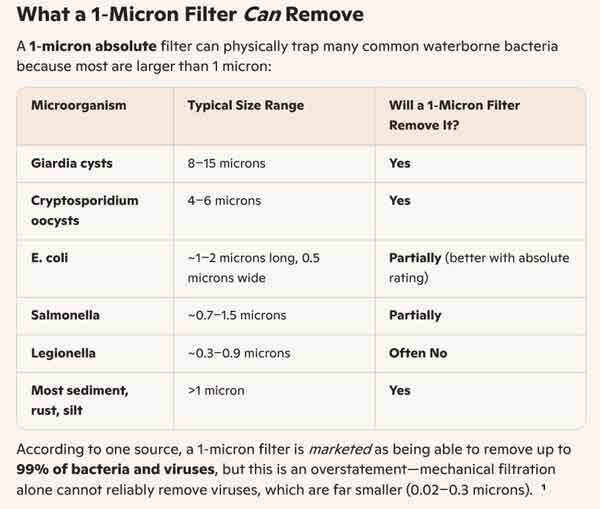
Fine Filtration: After sediment removal, water passes through a 1 micron filter. This step ensures that even the smallest contaminants are removed, making the water safe for drinking and long-term storage.
-
Activated Carbon Filtration (Optional): Many systems include carbon filters to reduce chlorine, odors, and improve taste.
-
Storage and Distribution: Once filtered, water is stored in tanks or delivered directly to taps, ensuring clean water is always available.
-
Health Protection: Prevents bacteria, parasites, and harmful particles from entering your drinking water.
-
Improved Taste and Odor: Removes unpleasant flavors caused by chlorine or organic matter.
-
System Longevity: Protects plumbing and appliances from sediment buildup.
-
Peace of Mind: Ensures safe hydration whether you’re docked at a marina or camping off-grid.
FAQs
1. What is the difference between a 5 micron and 1 micron filter?
A 5 micron filter removes larger particles like sand and rust, while a 1 micron filter captures much smaller contaminants, making water safe for drinking and storage.
2. Do I need both filters in my system?
Yes. Using both ensures comprehensive filtration—sediment is removed first, then finer contaminants are eliminated.
3. How often should I replace my filters?
Filter replacement depends on usage, size, and water quality, but generally every 3–6 months for prefilters and 6–12 months for fine filters.
4. Can I use the same system for both my boat and RV?
Absolutely. Many boat and RV water filter systems are designed to be versatile and adaptable to different setups.
5. Does filtration improve water taste?
Yes. Activated carbon filters, often included in systems, significantly improve taste and remove odors.
Investing in a marine and RV water filtration system is one of the smartest decisions for anyone who values health, convenience, and peace of mind while traveling. With CLR Marine’s recommended setup of a whole-house dual filter system you can purchase at any the big box store—5 micron prefilter for sediment and 1 micron charcoal filter for drinking water and storage—you’ll always have clean, safe water wherever your adventures take you.
|
January 26th, 2026 at 10:10 am
Marine Anchor Guide
Selecting the right anchor is one of the most important decisions a boater can make. Whether you’re fishing, overnighting, or securing your vessel in changing conditions, the right anchor ensures safety, stability, and peace of mind. This marine anchor guide breaks down the types of boat anchors, explains the best anchors for saltwater, and.
A reliable anchor keeps your vessel secure in wind, current, and tide shifts. According to marine experts, anchors serve as a lifeline—holding your boat in place during engine failure, rough weather, or while fishing and swimming. Choosing the right design ensures dependable holding power across different bottom types such as sand, mud, rock, and mixed seabeds.
Understanding anchor styles is the foundation of choosing the right gear. Below are the most common types of boat anchors, each suited for specific conditions and vessel sizes.
1. Fluke (Danforth‑Style) Anchors
Ideal for: Sand & mud
Benefits:
- Lightweight and easy to store
- Excellent holding power in soft bottoms
- Great for small to mid‑size boats
- Explore CLR Marine’s fluke anchor options on the Anchors category page:
2. Plow Anchors (Delta, CQR)
Ideal for: Sand, mud, grass, and mixed bottoms
Benefits:
- Self righting design
- Strong, consistent holding power
- Popular for cruising and offshore vessels
These versatile anchors are widely recommended for boaters who encounter varied seabeds.
3. Claw (Bruce Style) Anchors
Ideal for: Rocky, coral, and mixed bottoms
Benefits:
- Quick‑setting
- Reliable in shifting conditions
- Excellent for saltwater environments
Claw anchors are a top choice for boaters who anchor frequently in unpredictable terrain.
4. Grapnel Anchors
Ideal for: Small craft, kayaks, dinghies, and rocky bottoms
Benefits:
- Compact and foldable
- Good for temporary anchoring
- Useful for snagging rocks or reef structures
5. Mushroom Anchors
Ideal for: Soft mud, lakes, and long term mooring
Benefits:
- Simple design
- Best for calm, shallow waters
- Not recommended for strong currents or offshore use
The Best Anchors for Saltwater
Saltwater boating demands anchors built for corrosion resistance and high holding power. Based on industry guidance and product categories similar to those found at CLR Marine, the best anchors for saltwater typically include:
Claw/Bruce anchors – excel in rocky and mixed bottoms
Plow/Delta anchors – dependable in shifting tides and currents
When boating in saltwater, always pair your anchor with marine‑grade chain and shackles to maximize durability and holding strength.
How to Choose the Right Anchor for Your Boat
See this quick decision guide:
1. Match the Anchor to Your Bottom Type
- Sand/mud → Fluke or plow
- Rock/coral → Claw
- Mixed → Plow or claw
2. Plow Anchors (Delta, CQR)
Ideal for: Sand, mud, grass, and mixed bottoms
Benefits:
- Self righting design
- Strong, consistent holding power
- Popular for cruising and offshore vessels
These versatile anchors are widely recommended for boaters who encounter varied seabeds.
CLR Marine offers a curated selection of anchors designed for real‑world performance, durability, and value. See all CLR Marine Anchors and Docking Essentials.
|
January 18th, 2026 at 7:01 am
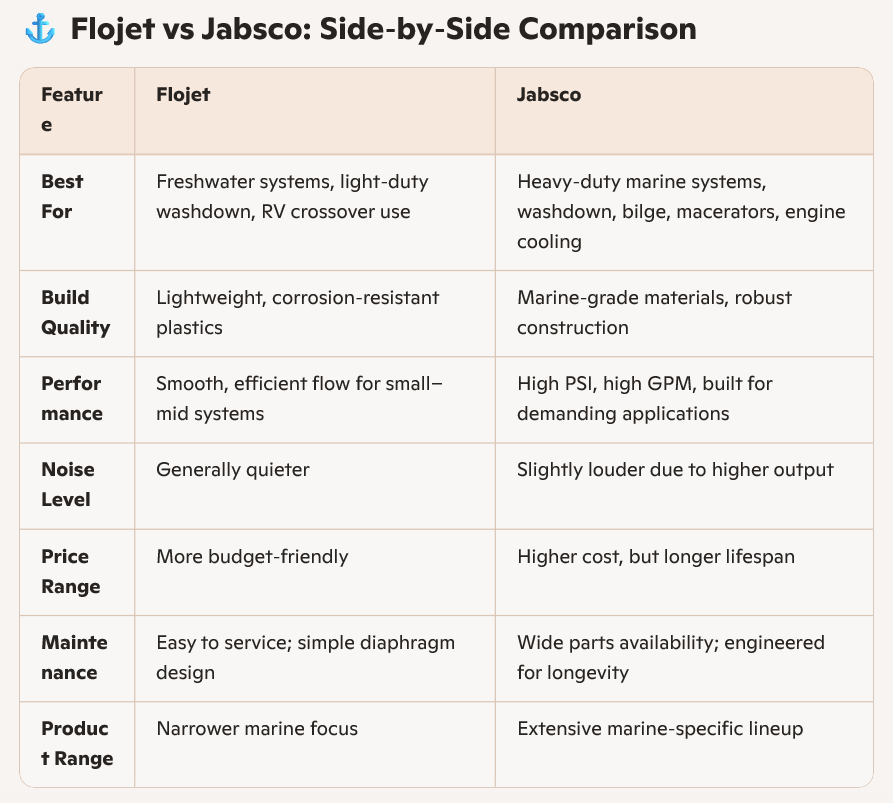
Compare Flojet vs Jabsco to find the best marine pump for your boat.
See differences in performance, durability, pressure, and value to choose the right pump with confidence.
Brand Overview
Flojet
Flojet is known for compact, efficient, and budget‑friendly pumps widely used in freshwater, RV, and light‑duty marine applications. Their diaphragm pump technology is reliable, easy to maintain, and ideal for boaters who want dependable performance without a premium price tag.
Jabsco
Jabsco is the gold standard in marine pumping systems. From bilge and washdown pumps to macerators and engine cooling pumps, Jabsco delivers rugged, high‑output performance trusted by boat builders and commercial operators worldwide. Their pumps are engineered for harsh saltwater environments and long‑term durability.
When to Choose Flojet
Flojet is the right choice if you want:
- A reliable freshwater pump for sinks, showers, or galley systems
- A quieter pump for smaller vessels
- A cost‑effective solution without sacrificing performance
- A lightweight pump that’s easy to install and maintain
Ideal for: center consoles, pontoons, small cruisers, and RV‑marine crossover setups.
When to Choose Jabsco
Jabsco is the better fit if you need:
- High‑pressure washdown performance
- A pump built for saltwater exposure and heavy use
- A wide range of marine‑specific options (bilge, macerator, cooling, livewell)
- Maximum durability and long‑term reliability
Ideal for: offshore boats, sportfishers, sailboats, commercial vessels, and any boat with high‑demand systems.
Which Brand Wins?
There’s no universal winner—only the best match for your application.
- Choose Flojet if you want quiet, efficient, budget‑friendly performance for freshwater or light‑duty systems.
- Choose Jabsco if you need rugged, high‑output pumps designed specifically for demanding marine environments.
For most high‑demand marine systems, Jabsco typically edges ahead thanks to its durability, saltwater‑ready engineering, and extensive product range. But for smaller boats or freshwater systems, Flojet delivers excellent value.
Shop Flojet and Jabsco Pumps at CLR Marine
CLR Marine carries a full lineup of both brands, including freshwater pumps, washdown pumps, macerators, bilge pumps, and replacement parts—backed by fast shipping and expert support.
|
January 12th, 2026 at 5:44 am
The Jabsco Legacy: Why This Brand Dominates Marine Pumping Systems
Introduction
When reliability on the water matters most, boaters consistently turn to Jabsco pumps—a brand recognized worldwide for its durability, engineering quality, and marine‑ready performance. From freshwater systems to bilge management and engine cooling, Jabsco has become a cornerstone of modern marine pumping solutions. This complete brand breakdown explores why Jabsco continues to dominate the market, what real boaters say in Jabsco pump reviews, and how CLR Marine supports customers with a full lineup of Jabsco marine products.
The Legacy Behind Jabsco Pumps
Jabsco is a global leader in marine pumping and fluid‑handling technology, engineered specifically for the demanding conditions of the leisure and commercial marine markets. Their product line spans:
- Water pressure systems
- Engine cooling pumps
- Bilge and waste management systems
- Washdown pumps
- Marine toilets
- Replacement impellers and pump heads
This broad range makes Jabsco one of the most trusted and widely used brands aboard recreational boats, yachts, and commercial vessels.
Why Boaters Trust Jabsco Pumps
1. Proven Reliability in Harsh Marine Environments
Jabsco pumps are engineered to withstand saltwater, vibration, continuous operation, and the unpredictable conditions of marine life. Their flexible impeller pumps, for example, are known for being self‑priming, robust, and easy to maintain.
2. Innovation That Improves On‑Water Experience
Jabsco continues to innovate with products like:
- Quiet Flush E2 Marine Toilet — praised for quiet operation and efficiency
- HotShot Washdown Pumps — high‑pressure cleaning performance
- Par‑Max Diaphragm Pumps — smooth, quiet freshwater delivery
These innovations keep the brand ahead of competitors and maintain strong customer loyalty.
3. Wide Range of Marine Applications
Whether you’re outfitting a small fishing boat or a large cruiser, Jabsco offers solutions for:
- Freshwater systems
- Waste and sanitation
- Deck washdown
- Engine cooling
- Fuel transfer
- General fluid handling
This versatility is a major reason boaters consistently choose Jabsco over other brands.
4. Strong Support & Replacement Parts Availability
Jabsco provides extensive replacement parts—including impellers, pump heads, seals, and service kits—ensuring long‑term support and easy maintenance. This reduces downtime and extends the life of every pump.
What Boaters Say: Jabsco Pump Reviews
Across the marine community, Jabsco pump reviews consistently highlight:
- Long service life
- Easy installation
- Quiet operation
- Reliable performance under load
- Strong availability of replacement parts
Boaters appreciate that Jabsco pumps are “install‑and‑forget” components—once installed, they simply work.
CLR Marine’s own customers frequently choose Jabsco for upgrades and replacements because the brand has a proven track record of delivering dependable performance season after season.
Popular Jabsco Marine Products
Based on brand data and market demand, some of the most sought‑after Jabsco marine products include:
- Jabsco Par‑Max Freshwater Pumps
- Jabsco HotShot Washdown Pumps
- Jabsco Flexible Impeller Pumps
- Jabsco Macerator Pumps
- Jabsco Engine Cooling Pumps
- Jabsco Quiet Flush Toilets
- Jabsco Replacement Impellers & Service Kits
CLR Marine carries a full selection of these products, making it easy for boaters to find the exact pump or part they need.
Why Buy Jabsco Pumps from CLR Marine?
Your Jabsco manufacturer page at CLR Marine is perfectly positioned to capture brand‑driven search traffic. Here’s how this article supports that:
- Reinforces brand authority
- Targets high‑intent keywords
- Strengthens category relevance
- Helps users navigate directly to product listings
CLR Marine offers:
- Competitive pricing
- Fast shipping
- Expert support
- A curated selection of genuine Jabsco pumps and parts
This combination makes CLR Marine a trusted source for boaters upgrading or maintaining their onboard systems.
Conclusion
Jabsco pumps have earned their reputation through decades of innovation, reliability, and marine‑focused engineering. Whether you’re looking for freshwater pressure, waste management, engine cooling, or washdown performance, Jabsco delivers solutions that boaters trust.
Explore the full lineup of Jabsco marine products at CLR Marine and find the right pump for your vessel today.
|
January 4th, 2026 at 9:53 am
Marine plumbing systems are the hidden backbone of a safe, comfortable, and functional boat.
Whether you’re managing freshwater delivery, bilge drainage, sanitation, or livewell circulation, every system relies on pumps, hoses, valves, and fittings that must withstand harsh marine environments. Understanding how these systems work — and how to maintain them — helps prevent failures, odors, leaks, and costly repairs.
This complete guide breaks down the essentials of marine plumbing so boat owners can troubleshoot confidently, upgrade intelligently, and choose the right components for long‑term reliability.
Why Marine Plumbing Matters
Unlike household plumbing, marine plumbing must operate in a constantly moving, corrosive, space‑restricted environment. A single failed hose clamp or worn‑out pump can lead to flooding, contamination, or system shutdowns.
A well‑designed marine plumbing system ensures:
- Reliable freshwater access
- Safe and efficient waste management
- Proper bilge drainage
- Consistent engine and equipment cooling
- Healthy bait and livewell environments
- Reduced risk of leaks and onboard damage
Core Components of Marine Plumbing Systems
1. Freshwater Systems
Freshwater systems supply clean water to sinks, showers, and galley fixtures.
Key Components
- Freshwater pump (typically 12V diaphragm pumps)
- Accumulator tank
- Freshwater tank
- PEX or reinforced marine hose
- Strainers & check valves
What to Look For
- PSI rating that matches your fixtures
- Quiet operation
- Self‑priming capability
- Corrosion‑resistant materials
2. Marine Sanitation Systems (MSD)
Sanitation systems handle waste collection, treatment, and discharge.
System Types
- Portable toilets
- Manual or electric marine heads
- Vacuum-flush systems
- Holding tanks
Common Components
- Macerator pumps
- Y‑valves
- Vent filters
- Odor‑resistant sanitation hose
Best Practices
- Use only marine‑grade sanitation hose to prevent permeation
- Regularly flush with freshwater
- Inspect vent lines for blockages
3. Bilge Pumping Systems
Bilge systems remove water that accumulates in the hull — a critical safety function.
Types of Bilge Pumps
- Centrifugal pumps (most common)
- Diaphragm pumps (self‑priming, good for dry bilges)
Sizing Rule of Thumb
- Small boats: 1,000–1,500 GPH
- Mid‑size boats: 2,000–3,500 GPH
- Large vessels: 4,000+ GPH
Don’t Forget
- Automatic float switches
- High‑water alarms
- Smooth‑bore hose for maximum flow
4. Livewell & Baitwell Systems
These systems keep bait and catch alive with constant water circulation.
Key Components
- Aerator pumps
- Livewell pumps
- Spray heads
- Overflow fittings
Pro Tips
- Choose pumps rated for continuous duty
- Use corrosion‑resistant strainers
- Install seacock protection on all thru‑hulls
5. Raw Water & Washdown Systems
Raw water systems pull seawater for cooling, cleaning, or deck washdown.
Common Components
- Raw water pump
- Strainer
- Seacock
- High‑pressure washdown pump
Maintenance Essentials
- Clean strainers regularly
- Inspect seacocks for corrosion
- Replace hoses showing wear or softness
Marine Plumbing Materials: What You Should Use
Hoses
- Reinforced PVC hose — freshwater
- Sanitation hose — odor‑resistant
- Smooth‑bore bilge hose — maximum flow
- Braided hose — high‑pressure applications
Fittings
- Nylon — lightweight, corrosion‑resistant
- Bronze — best for below‑waterline
- Stainless steel — high strength
- PVC — freshwater only
Clamps
- Always use 316 stainless steel
- Double‑clamp below the waterline
Marine Pump Sizing Basics
Choosing the right pump is one of the most important decisions in marine plumbing.
Key Factors
- GPH/GPM flow rate
- PSI requirements
- Vertical lift (head height)
- Duty cycle
- Voltage (12V/24V)
Example
A freshwater pump may require:
- 3–5 GPM
- 40–55 PSI
- Self‑priming up to 6–10 ft
A bilge pump may require:
- 1,500–3,500 GPH
- Low head pressure
- Automatic float switch
Maintenance Checklist for Marine Plumbing Systems
Monthly
- Inspect hoses for cracks or softness
- Test bilge pump and float switch
- Check for leaks around fittings
Seasonally
- Flush freshwater system
- Clean strainers
- Inspect seacocks and valves
- Treat sanitation system to prevent odor
Annually
- Replace worn clamps
- Service pumps
- Inspect holding tank vent filters
- Pressure‑test freshwater lines
Common Marine Plumbing Problems & How to Fix Them
1. Low Water Pressure
- Clogged strainer
- Failing freshwater pump
- Air leaks in suction line
2. Bilge Pump Not Activating
- Faulty float switch
- Blown fuse
- Blocked discharge hose
3. Persistent Odors
- Permeated sanitation hose
- Blocked vent line
- Stagnant water in tank
4. Pump Losing Prime
- Air leak
- Worn impeller
- Incorrect hose routing
When to Upgrade Your Marine Plumbing System
Upgrade when you notice:
- Frequent pump cycling
- Reduced flow
- Hose discoloration or odor
- Corroded fittings
- Outdated non‑marine‑grade components
Modern pumps are quieter, more efficient, and more reliable — a worthwhile investment for safety and comfort.
Final Thoughts
A well‑maintained marine plumbing system keeps your boat safe, comfortable, and compliant. Understanding how each subsystem works — freshwater, sanitation, bilge, livewell, and raw water — empowers boat owners to troubleshoot issues early and choose the right components for long‑term reliability.
|
December 31st, 2025 at 10:59 am
A complete, guide for a reliable, water safe Trailer Lighting System
Submersible trailer lights are designed to withstand repeated dunking at the boat ramp, but they still rely on proper wiring to stay bright, legal, and long lasting. Below is a structured walkthrough you can use for your own work.
What You’ll Need:
- Submersible trailer light kit (tail lights + side markers)
- 4‑pin or 5‑pin trailer wiring harness (most small boat trailers use 4‑pin)
- Heat‑shrink butt connectors or waterproof connectors
- Wire strippers/crimpers
- Electrical tape or heat‑shrink tubing
- Zip ties or cable clamps
- Self‑tapping screws (for grounding)
- Dielectric grease (optional but recommended)
Understanding the Wiring Colors (Standard 4‑Pin Flat)
.png?opt=5 "4-Pin_Wire_Color_Code")
If using a 5‑pin harness (common for trailers with surge brakes), the extra blue wire is for the reverse lockout solenoid.
Step‑by‑Step Installation
1. Prepare the Trailer
- Park on level ground.
- Disconnect the trailer from the tow vehicle.
- Remove old wiring if necessary.
- Inspect the frame for clean grounding points.
2. Mount the Submersible Lights
Install the left and right tail lights according to the manufacturer’s instructions.
- Ensure the left light includes the license plate illuminator.
- Mount side marker lights on the fenders or frame rails
3. Run the Main Wiring Harness
- Starting at the tongue, feed the 4‑pin connector toward the rear.
- Run the yellow wire down the left frame rail.
- Run the green wire down the right frame rail.
- The brown wire will split to both sides for running lights.
- Use zip ties or clamps every 12–18 inches to secure the harness.
4. Ground the System
- Attach the white ground wire to clean, bare metal on the trailer tongue.
- Use a self‑tapping screw and star washer for a solid connection.
- Each light should also have its own ground—either through the mounting bolts or a dedicated white wire.
5. Connect the Tail Lights
Match wire colors:
- Yellow → Left brake/turn
- Green → Right brake/turn
- Brown → Running lights
- White → Ground
- Use heat‑shrink connectors for waterproofing.
- Apply dielectric grease to prevent corrosion.
6. Connect the Side Marker Lights
Each marker light typically has:
- Brown wire → Running lights
- White wire → Ground
- Ground to the frame or run a dedicated ground wire if the frame is painted or coated.
7. Seal and Protect All Connections
- Heat‑shrink all connectors.
- Wrap exposed areas with electrical tape.
- Keep wiring away from moving parts, sharp edges, and the trailer suspension.
8. Test the Lights
Connect the trailer to the tow vehicle and check:
- Tail/running lights
- Left and right turn signals
- Brake lights
- Side markers
- License plate light
If something doesn’t work:
- Recheck grounds first—they cause 80% of trailer lighting issues.
Tips for Long‑Lasting Submersible Trailer Lights
- Always unplug the trailer before backing into the water.
- Use LED submersible lights—they resist shock and water far better than incandescent.
- Reapply dielectric grease annually.
- Inspect wiring at the start of each boating season.
Shop CLR Marine for all of your trailer needs
|
December 28th, 2025 at 10:48 am
Marine plumbing systems are the hidden backbone of a safe, comfortable, and functional boat. Whether you’re managing freshwater delivery, bilge drainage, sanitation, or livewell circulation, every system relies on pumps, hoses, valves, and fittings that must withstand harsh marine environments. Understanding how these systems work — and how to maintain them — helps prevent failures, odors, leaks, and costly repairs.
This complete guide breaks down the essentials of marine plumbing so boat owners can troubleshoot confidently, upgrade intelligently, and choose the right components for long‑term reliability.
Why Marine Plumbing Matters
Unlike household plumbing, marine plumbing must operate in a constantly moving, corrosive, space‑restricted environment. A single failed hose clamp or worn‑out pump can lead to flooding, contamination, or system shutdowns.
A well‑designed marine plumbing system ensures:
- Reliable freshwater access
- Safe and efficient waste management
- Proper bilge drainage
- Consistent engine and equipment cooling
- Healthy bait and livewell environments
- Reduced risk of leaks and onboard damage
Core Components of Marine Plumbing Systems
Freshwater systems supply clean water to sinks, showers, and galley fixtures.
Key Components
- Freshwater pump (typically 12V diaphragm pumps)
- Accumulator tank
- Freshwater tank
- PEX or reinforced marine hose
- Strainers & check valves
What to Look For
- PSI rating that matches your fixtures
- Quiet operation
- Self‑priming capability
- Corrosion‑resistant materials
Sanitation systems handle waste collection, treatment, and discharge.
System Types
- Portable toilets
- Manual or electric marine heads
- Vacuum-flush systems
- Holding tanks
Common Components
- Macerator pumps
- Y‑valves
- Vent filters
- Odor‑resistant sanitation hose
Best Practices
- Use only marine‑grade sanitation hose to prevent permeation
- Regularly flush with freshwater
- Inspect vent lines for blockages
Bilge systems remove water that accumulates in the hull — a critical safety function.
Types of Bilge Pumps
- Centrifugal pumps (most common)
- Diaphragm pumps (self‑priming, good for dry bilges)
Sizing Rule of Thumb
- Small boats: 1,000–1,500 GPH
- Mid‑size boats: 2,000–3,500 GPH
- Large vessels: 4,000+ GPH
Don’t Forget
- Automatic float switches
- High‑water alarms
- Smooth‑bore hose for maximum flow
These systems keep bait and catch alive with constant water circulation.
Key Components
- Aerator pumps
- Livewell pumps
- Spray heads
- Overflow fittings
Pro Tips
- Choose pumps rated for continuous duty
- Use corrosion‑resistant strainers
- Install seacock protection on all thru‑hulls
Raw water systems pull seawater for cooling, cleaning, or deck washdown.
Common Components
- Raw water pump
- Strainer
- Seacock
- High‑pressure washdown pump
Maintenance Essentials
- Clean strainers regularly
- Inspect seacocks for corrosion
- Replace hoses showing wear or softness
Marine Plumbing Materials: What You Should Use
Hoses
- Reinforced PVC hose — freshwater
- Sanitation hose — odor‑resistant
- Smooth‑bore bilge hose — maximum flow
- Braided hose — high‑pressure applications
Fittings
- Nylon — lightweight, corrosion‑resistant
- Bronze — best for below‑waterline
- Stainless steel — high strength
- PVC — freshwater only
Clamps
- Always use 316 stainless steel
- Double‑clamp below the waterline
Marine Pump Sizing Basics
Choosing the right pump is one of the most important decisions in marine plumbing.
Key Factors
- GPH/GPM flow rate
- PSI requirements
- Vertical lift (head height)
- Duty cycle
- Voltage (12V/24V)
Example
A freshwater pump may require:
- 3–5 GPM
- 40–55 PSI
- Self‑priming up to 6–10 ft
A bilge pump may require:
- 1,500–3,500 GPH
- Low head pressure
- Automatic float switch
Maintenance Checklist for Marine Plumbing Systems
Monthly
- Inspect hoses for cracks or softness
- Test bilge pump and float switch
- Check for leaks around fittings
Seasonally
- Flush freshwater system
- Clean strainers
- Inspect seacocks and valves
- Treat sanitation system to prevent odor
Annually
- Replace worn clamps
- Service pumps
- Inspect holding tank vent filters
- Pressure‑test freshwater lines
Common Marine Plumbing Problems & How to Fix Them
1. Low Water Pressure
- Clogged strainer
- Failing freshwater pump
- Air leaks in suction line
2. Bilge Pump Not Activating
- Faulty float switch
- Blown fuse
- Blocked discharge hose
3. Persistent Odors
- Permeated sanitation hose
- Blocked vent line
- Stagnant water in tank
4. Pump Losing Prime
- Air leak
- Worn impeller
- Incorrect hose routing
When to Upgrade Your Marine Plumbing System
Upgrade when you notice:
- Frequent pump cycling
- Reduced flow
- Hose discoloration or odor
- Corroded fittings
- Outdated non‑marine‑grade components
Modern pumps are quieter, more efficient, and more reliable — a worthwhile investment for safety and comfort.
Final Thoughts
A well‑maintained marine plumbing system keeps your boat safe, comfortable, and compliant. Understanding how each subsystem works — freshwater, sanitation, bilge, livewell, and raw water — empowers boat owners to troubleshoot issues early and choose the right components for long‑term reliability.
how to maintain a marine plumbing system, complete guide to boat plumbing systems, best components for marine plumbing upgrades, how marine plumbing systems work on boats, common marine plumbing problems and solutions, marine plumbing system troubleshooting tips, how to choose a freshwater pump for a boat, best hoses for marine freshwater systems, how to increase water pressure on a boat, freshwater pump installation guide for boats, marine freshwater system maintenance checklist, how to prevent odors in marine sanitation systems, best marine sanitation hose for odor control, how to maintain a marine toilet and holding tank, troubleshooting marine macerator pump issues, marine sanitation system upgrade recommendations, how to size a bilge pump for your boat, best bilge pump hose for maximum flow, bilge pump troubleshooting and maintenance tips, how to install an automatic bilge pump switch, signs your bilge pump needs replacement, best pumps for livewell and baitwell systems, how to install a livewell pump on a boat, livewell plumbing setup for fishing boats, how to improve baitwell water circulation, choosing the right aerator pump for your boat, how to install a raw water washdown pump, best raw water strainers for boats, maintaining raw water cooling systems on boats, how to choose a marine washdown pump, raw water system troubleshooting guide, best marine hose types for plumbing systems, how to choose marine plumbing fittings, difference between nylon and bronze marine fittings, when to replace marine plumbing hoses, marine hose clamp recommendations for boats, how to choose the right marine pump, marine pump sizing guide for boat owners, gph vs gpm for marine pump selection, best 12v pumps for marine plumbing systems, signs your marine pump needs replacement, annual maintenance checklist for marine plumbing, how to upgrade outdated marine plumbing components, best practices for marine plumbing inspections, how to prevent leaks in boat plumbing systems, marine plumbing upgrades for older boats,
|
 CLRMarine

